
Until It Can Not Deny Me - One Immigrant’s Journey - Part 1
The First Step Was the Hardest One
OPENING
There was a version of me that hesitated.
She stood at the edge of a decision — one side was everything she had always known: her parents, her home, the country where every street and smell and sound was familiar, where she was settled, where she belonged without having to explain herself. The other side was a flight ticket. A new country. A life she could not fully picture yet.
She hesitated not because she lacked courage. But because courage, when you are quiet and sensitive, doesn’t always feel like courage. It feels like fear wearing a very thin coat.
And she knew something about herself, standing at that edge. She knew that the life in front of her — if she chose the ticket, if she chose to go — would be full of challenges she was not sure she could handle. Not in the loud, dramatic way of someone who doubts themselves in public. But in the private, honest way of an introvert who has spent a lifetime reading situations clearly and seeing difficulty before it arrives.
She saw what was coming. The new language. The new rules. The new world where nothing would be automatic and everything would require translation — not just of words but of herself.
And she chose the ticket anyway.
That version of me went anyway. And everything in this book happened because she did.
WHEN EVERYTHING WAS BLURRY
The first thing I remember about America is how blurry it all felt. Not blurry like a photograph. Blurry like a future you cannot yet make out the shape of.
I did not know where to start, what career to pursue, or how to read the invisible rules of a new culture. Every small thing that other people did automatically required thought, effort, and a private rehearsal I did not let anyone see.
I remember standing at a Dunkin Donuts counter with my heart beating faster than it should have. All I wanted was a coffee. Simple. Ordinary. The kind of thing a person does without thinking.
I stepped up and said the only words I had ready: “Hi. I want a coffee.”
The woman behind the counter smiled and said something back — a question, I could tell from the rise in her voice. But the words that followed were words I had never heard before. Mocha. Espresso. Vanilla. Sizes I did not know the names of. Options that assumed a familiarity with a world I had only just arrived in.
All I needed was coffee. The simple black caffeine liquid that makes you warm and wakes you up — the kind I had been drinking my whole life to survive the jet lag of a body that did not yet know which timezone it belonged to. I did not need it flavored or sweetened or made into something with a long name. I just needed it hot and strong and familiar.
But standing there, unable to answer the question I had not understood, I felt the woman’s eyes stay on me a half-second too long. That pause — small, probably unintentional, almost certainly forgotten by her the moment I walked away — sat in me like a stone. I smiled. I pointed at something. I took whatever she gave me and walked out into the American morning feeling, for a moment, like the smallest person in the world.
That is what nobody tells you about immigration. Not the paperwork, not the big dramatic moments of culture shock. It is the Dunkin Donuts moments. The ones that seem too small to matter and yet stay with you for years.
THE PATH EVERYONE RECOMMENDED
When you are a Vietnamese woman who has just arrived in America, there is a path that gets recommended. Not by strangers — by family. By the Vietnamese women who came before you, who are trying to help.
The path is nail technician.
It makes sense practically. You can learn it quickly, earn money quickly, and you do not need perfect English or a degree. For a woman who just arrived with nothing but an unformed dream, it is an offer of stability where nothing yet feels stable.
So I went. Three months, and I had a certification, a station at a nail salon, and tools I was learning to use. I showed up. I did the work. I painted nails and shaped them and made small conversations, and got through the days.
But I did it without emotion. My hands were present. My mind was somewhere else entirely. Deep down, I knew: this is not the life I came here for. I had carried dreams across an ocean — serious dreams about becoming someone knowledgeable, trusted and capable. I had not left everything familiar to spend my days doing something my hands could do without my heart.
So I kept painting nails. And kept the dream quiet inside me, like a pilot light that refuses to go out even when everything around it is cold.
THE LADY AT THE SOCIAL SECURITY OFFICE
I needed some official paperwork one day and went in person to the Social Security office. I sat and waited and eventually was called to a desk.
What I remember is the woman behind it.
She was elegant — not showy, not flashy. Elegant in the quiet way of someone who knows exactly who she is and what she is doing. She spoke with authority and handled the paperwork with calm, practiced efficiency. Her presence said: this person belongs here.
I sat across from her and could not stop watching. I was always good at watching without appearing to watch — the introvert’s particular skill. I watched her hands on the keyboard, the way she explained things clearly and with patience, the way she held her space — not aggressively, not in an unsure way, but fully, as if she had every right to be exactly where she was.
And something shifted in me. Something shapeless became, briefly, clear.
That. I want to become that.
Not her job, not her office, not the exact details of her life. But the version of a person who has built enough knowledge and credibility to sit anywhere and be trusted. The one whose presence says: I have earned my place here.
I walked out of that office and back to my nail station knowing something I had not fully known before: I was not going to paint nails for the rest of my life. I did not know yet what I would do instead. But I knew, with the kind of certainty that lives in the body rather than the mind, that I was going to find a way to become that woman.
THE DAY I QUIT
I quit without a plan. I want to be honest about that. It was not a wise, strategic decision. It was a gut decision by someone who could not stand living a life she did not want for one more day than necessary.
The money at the nail salon was not bad — better, in fact, than what I would make for a long time afterward. But every hour there was an hour I was not spending on what I actually wanted. And I am not someone who can do things halfway, or do things I don’t believe in, or fill my days with work that doesn’t feel like mine.
So I quit. Not dramatically. Not with a speech. I just stopped going.
WHAT THEY SAID — AND WHAT I FELT
Leaving the nail salon was not clean. Decisions that go against what people expect of you rarely are.
The salon owner did not say it loudly. She didn’t need to. Introverts develop a particular skill over years of close attention: we feel what is not said. What she communicated, in the indirect way of someone who doesn’t quite say the thing they mean, was this: you only have one option. Nail. College? Ridiculous.
A family member talked behind my back. Said I wasn’t being realistic. I found out the way you always find out — indirectly, in pieces, through a tone that changed slightly when they saw me.
It hurt. I won’t pretend otherwise. It hurt because it came from people who were supposed to believe in me. And because somewhere in the part of my mind where doubt lives, I wasn’t entirely sure they were wrong.
My parents were overseas. They didn’t say stop. They didn’t say go. They watched from a distance, worried, and respected my choice — which, from a parent watching their child make a risky decision in a foreign country, is its own kind of love. A quiet, trusting, terrifying kind. To them, my future was as blurry as it was to me. But they kept watching. And I carried that with me.
When the people around you don’t believe in your dream, the dream doesn’t disappear. It just becomes something you carry alone. And carrying it alone makes you stronger than ever.
Every skeptical silence, every whispered concern, every half-said implication that I wasn’t being realistic — they all became reasons. I got quieter, and more determined, and kept moving.
THE PHO RESTAURANT
I walked into a Vietnamese pho restaurant and asked for a job. It was the next practical thing: I needed money and hours that left room for studying.
The restaurant was alive in a way the nail salon never was. People in conversation, in need of things, moving through their evenings with hunger and stories. I carried bowls of pho and refilled water glasses and talked — in imperfect English and comfortable Vietnamese — and felt something I hadn’t felt at the nail station: present.
It was fun at first. Genuinely, surprisingly fun. I was communicating, reading people — which table needed more time, which customer wanted conversation, which moment required patience. Not small skills. The skills of someone who pays attention.
There were small dramas too, the way there always are in tight spaces where everyone knows everyone’s business. I learned to adjust without losing myself, to coexist with people I didn’t always understand, to let small conflicts pass without letting them stop me. That restaurant taught me people. And people, it turned out, was exactly what I would spend the rest of my career trying to understand.
THE FIRST DAY
I remember walking into my first community college classroom feeling like everyone else had been given a manual I never received. They knew where to sit, how to talk to the professor, what ‘office hours’ meant. I smiled and nodded and quietly wrote everything down — not just the lesson, but how people around me moved through a world I was still learning to read.
My English was functional. My confidence was not.
I chose accounting not because it was my passion, but because numbers felt safer than words in a second language. Numbers don’t have an accent. They don’t make you feel small. A balance sheet balances the same way whether you lived in Saigon or in California.
THE LIBRARY AT NINE O’CLOCK
My days had a shape. Work first. Then class. Then the library.
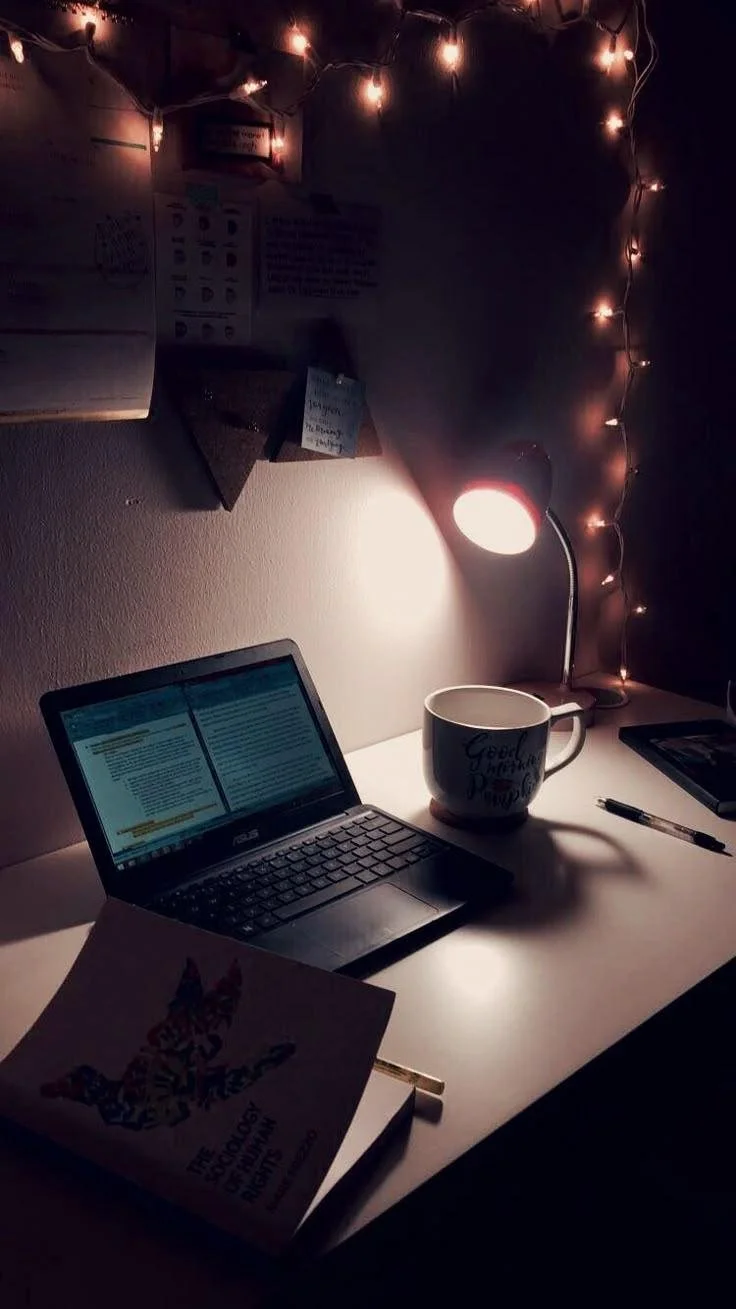
I would finish a five-hour restaurant shift — on my feet, carrying things, performing the presence that service work requires — then walk to campus, switch my brain from survival mode to learning mode, and sit in class. Then the library. Every day until nine o’clock, sometimes later. Reading things twice, sometimes three times, because English academic language still needed internal translation before it could settle.
My feet ached. The lights were too bright and too cold. I was tired in a way that sat behind my eyes. But in those hours, I was completely mine. No customer needed anything. No restaurant drama followed me in. My parents were asleep on the other side of the world. In the library, at nine o’clock, it was just me and the work and the version of myself I was slowly, page by page, building.
Being alone in a country that is not yet yours is hard in a way that doesn’t translate well. Not lonely like a quiet weekend. Lonely in a structural sense — like a building where the walls are still going up and there is no roof yet and the wind comes through from every direction. I missed my parents. I missed being known without explanation.
That library, at nine o’clock at night, was the beginning of everything.
WHAT NOBODY TELLS YOU
Nobody tells you that community college is brave. The culture around higher education makes it feel like a lesser choice — a backup plan, a participation prize. But I want to say clearly to anyone reading this at that same starting point:
Starting where you are is not a small thing. It is the wiser choice.
Community college gave me time. Time to adjust without the pressure of a four-year university bill. Time to prove to myself — quietly, without applause — that I could do this. That my brain worked in English. That I belonged in a classroom even when I didn’t feel like I did.
WHAT I WAS NOT YET THINKING
I was not thinking about how far I would go. Not imagining a Master’s degree or the CPA exam or an Auditor career. I was not following a strategy.
I was just following the feeling that said: not this.
That is all it was. A quiet, stubborn refusal to spend my life doing something that didn’t feel like mine. That single inability — the refusal to settle for the convenient over the meaningful — is what set everything else in motion.
She was not bold. Not fearless. Not certain. She was scared almost every day. But she had one thing that turned out to be enough: she could not live a life she did not want.
A NOTE TO THE READER
If you are somewhere at the beginning — new country, new school, new chapter — and you feel like everyone else has a map you were never given:
The map doesn’t exist. We are all drawing it as we go.
Follow your instincts. Even when you can’t explain them. Even when the people who love you are pointing elsewhere.
All experiences are worthy. The nail salon was not a mistake — it taught me what I didn’t want, and that is its own kind of knowledge. Every detour gives you something you didn’t know you’d need.
Keep trying until you hear that quiet sound inside you that says: yes. This is right. That sound is always worth waiting for.
Difficulties will always be with you. The question is which difficulties you are willing to take.
The difficulties of building the life you want are hard. But they are hard in a direction — they move you somewhere that is yours. The difficulty of living a life that is not yours is a different kind of hard — harder, because it leads nowhere except further from yourself.
The woman at that desk did not appear in my life by accident. She appeared because I needed to see what was possible. And now I am writing this on the other side of it, telling you: it is possible. For the quiet ones too. Especially for the quiet ones.
I NEVER LOOKED BACK
I did not look back at the nail salon. I chose the harder road because the easier one was not mine. And a road that is not yours — however smooth — will always feel like walking in the wrong direction.
The restaurant, the library at nine, the aching feet, the parents watching from overseas with their quiet faithful worry — all of it was hard. All of it was worth it. Not because it led somewhere comfortable, but because it led somewhere that is yours.
I could not see any of what was coming — the degree, the exam, the career, the book you are reading. At that time, I could only see the next assignment, the next shift, the next page before nine o’clock.
But I kept going. That is the whole story, really. Under all the detail and all the memory and all the things that run through this series — the story is just this:
